
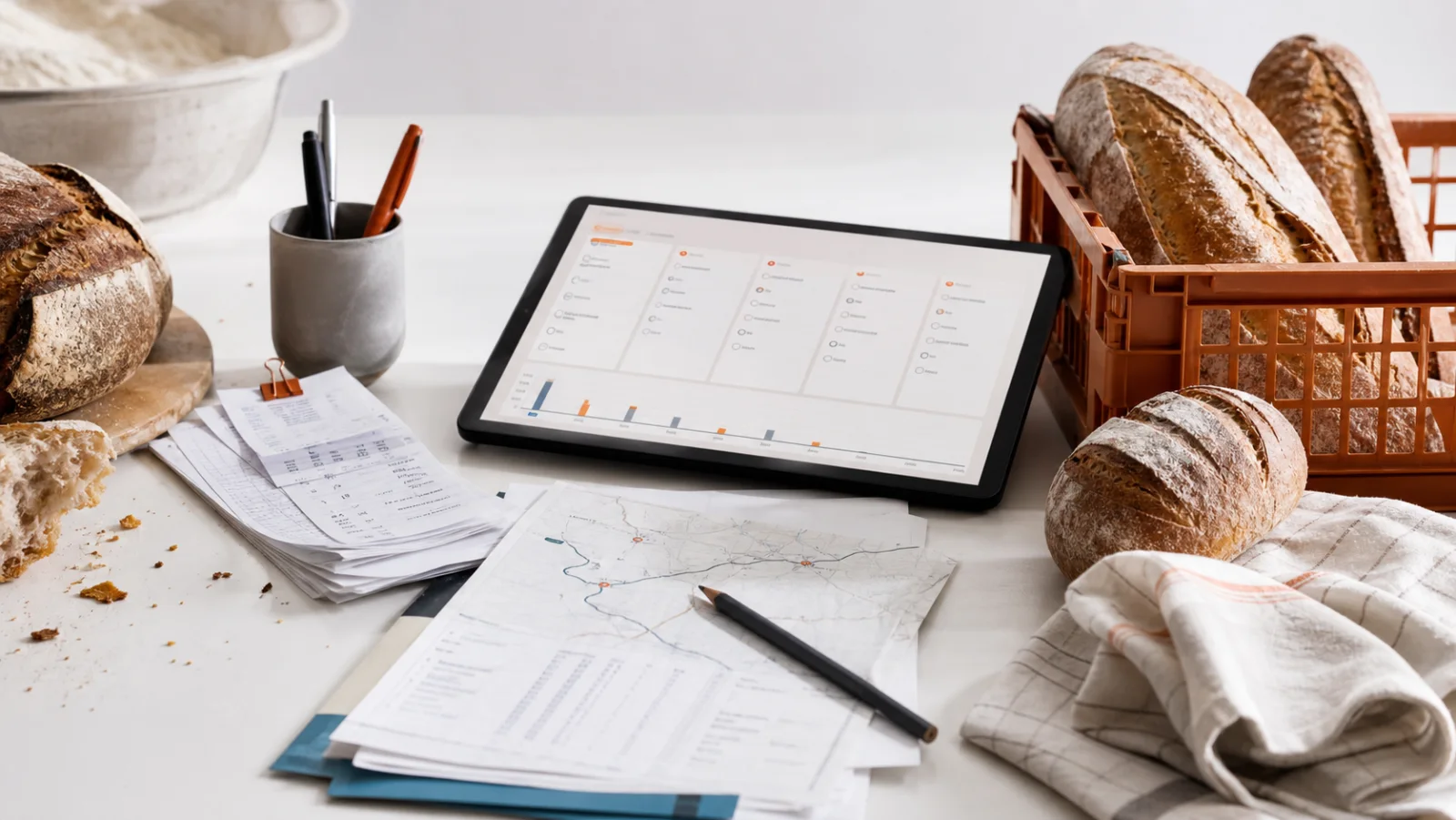
It’s 11:40 pm. Six more rooms are occupied than the hotel expected. The receptionist opens tomorrow’s breakfast order and changes 12 baguettes to 18. Orders close in twenty minutes. The baker won’t start work for another few hours.
The scenario illustrates a rule from the ordering portal built for L’Ami du Pain near La Rochelle. Its business customers can adjust quantities until midnight. The quantities below are sample figures you can change in the demo.
Change the hotel’s order in the demo
At the bakery, how many go in the oven?
The other customers have ordered 38 baguettes between them. With the hotel’s original 12, the bake sheet showed 50. Once the receptionist saves the change, it should show 56. A total of 68 means the revised order was added on top of the original. A total of 50 means the hotel has a confirmation the bakery can’t fulfil.
This is a useful first prototype test. Change the order to 18, then put it back to 12. The bake sheet should return to 50. In two moves the team can check how the system handles a correction.
At the loading bay, how many go in the crate?
The driver wants the quantity for the next stop. If the paperwork says “56 baguettes”, someone has handed over the bake sheet. The delivery note should say 18 baguettes for the hotel. The same edit changes a product total for the baker and a single line on one stop for the driver.
You can see the preparation and packing screens in the L’Ami du Pain case study.
What if reception calls at five past midnight?
Ask this before designing the order form. The first batch might already be in the oven. The driver might have printed the delivery note. Who can still agree to six extra baguettes? How will the driver know that the sheet in the van is out of date?
To plan a test for your business, pick an order someone corrected last week. Write down the original quantity, the new one, the cut-off time and the two people who needed to see the change. That gives us a concrete starting point for deciding what your first prototype needs to show. Describe my ordering process